


The moment someone sees your book has 2 reviews, they think “Oh, they are THAT kind of author.”
The number 1 way to get people to take you seriously is to write a book and have a lot of good reviews for it.
As Flywheel Builders our first job is simple, but hard, claim a category we belong to.
The easiest way is to,
1. Figure out who your person, problem, and POV is
2. Create a framework of how they work through that problem
3. Write a book about that framework
But once you have the book, if no one reads it, uses, or reviews it… it really doesn’t have the effect we hoped it would.
The moment someone checks out your book on Amazon and sees 2 reviews… they don’t want to buy it and they don’t believe you are really professional.
We lack credibility because we lack… social proof.
I faced this back in 2020.
I had written God is Like a Geyser. A Christian Observational about how I learned things about God by spending time in Yellowstone National Park.
I’d push people to the book and it had 20 reviews. My click rate was good on ads, but the take rate was abysmal. People wouldn’t spend $0.99 or even FREE due to lack of reviews.
So I vowed I’d do everything I could to get reviews for that book. (other than pay for people to leave fake reviews.)
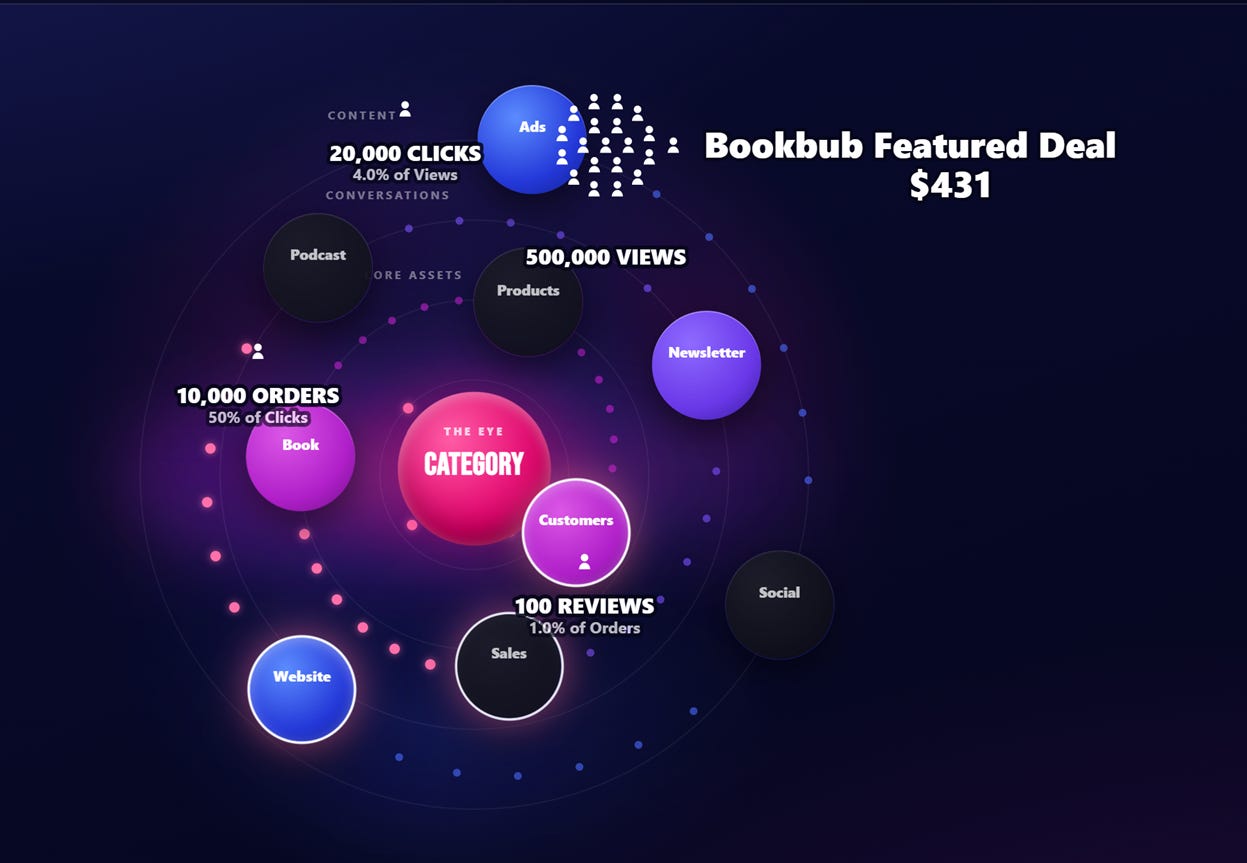
I heard that the best way to get a lot of people to read your book and ultimately review it was to get a Bookbub promo. 1 million readers and often made authors careers.
I wanted it and I wanted it bad.
The problem?
You had to have around 100 reviews to get accepted. I had my first goal.
How I Got My First 100 Reviews of My Book
I set out to “crack the code” on getting reviews.
Do you know what I found the top two things I had to do to get people to leave reviews was?
1. Get a lot of people to download my book
2. Ask them to review it
It’s so stupidly simple it hurts.
BECAUSE ITS BORING.
That’s why so few people do it.
Here is how I got my first 100 reviews.
1. Price my book as FREE
2. Buy book promos for God is Like a Geyser every couple weeks.
3. Run Bookbub ads to similar audiences consistently
I did that for a year.
My reviews climbed to right around 100 and that’s when I shifted to phase 2 of my review pursuit.
How I Reached Over 300 Reviews
I noticed that as I hit around 100 reviews my ads converted better.
More people downloaded my book when I gave it away.
Success bred more success.
People like to read a good book, they don’t like to take a gamble.
But I wanted more reviews.
I’d heard about bookbub Promos from a book by David Gaughran about Bookbub. I knew that getting a book promo could lift me into a new standing as an author to a cold reader.
Bookbub Promos go out to hundreds of thousands of readers in your genre and category of book.
Readers select if they’d like special deals sent to their inbox on Non-fiction, biography, religion, sci-fi, etc. and each day they get a curated list of books that are discounted within that genre.
Authors can’t just buy their way into Bookbub, it is too desirable a book promo. You must apply and get approved. One of the requirements is around 100 reviews, rated well, and the rest is a mystery.
You can apply every month, there is no cost to the author if you aren’t selected.
I applied 3 months in a row before getting selected.
With my Bookbub date set I realized I wouldn’t be in signal when it went out.
I was sailing off the coast of Florida to the Dry Tortugas, about a days sail, for a week with my wife and kids. Just so happens it was the week of my Bookbub.
I went 4 days without knowing the results of the ad going out.
The moment I was back in signal I checked my KDP reports. 12,000 people had downloaded my book in a 2-day period.
12,000…
Over the next 3 months reviews came in, poured in by my standards. As the dust settled I was close to 300 reviews.
But how did that happen?
How You Get People to Leave a Review on Your Book
Just because 12,000 people download your free book, doesn’t mean they’ll review it.
Practically you have to think through what has to happen for someone to leave a review… and the task is daunting.
1. They must see your book
2. They must select your book (even if free)
3. They must see your book in their library
4. They must read your book
5. They must like your book enough to read to the end
6. They must read your urgent plea for a review
7. They must rate your book
8. They must click the link to leave a review
9. They must leave a review
WOW. What a chain of events that must occur.
There are a few things that stand out that we can control and some things we can’t control.
1. We must market our book (see #1 above why)
2. We must have a good book cover (see my articles on how to make a QUICK book cover if intimidated)
3. We must have a compelling topic/hook
4. We must have clear subtitles and book description
5. We must have a good book (imagine that!) so they make it past chapter 1
6. We must ask for the review and make it easy for them
7. You must remind them to leave a review
Feels like a never ending to do list, I get it.
Before I left out to sea I had to make sure I had some things in place in my business flywheel to take advantage of such a huge marketing opportunity as Bookbub.
Book
Before I could even apply for Bookbub I had to have my book written and published on Amazon and optionally other retailers like Barnes and Noble, Kobo, Google Play, Apple, etc.
I had to have my book description right, smart categories selected, good cover, get my book listed for free.
Inside the book there had to be a lead magnet to entice the reader to sign up for my email list.
Website
Next, I had to have a lead magnet actually functional and working on my website.
Even if it was just a lead page generated by kit, it had to work. The person who takes the lead magnet, I can then remind in 20 or 30 days that if they enjoyed the book to leave a review.
The majority of the reviews I got came from people who signed up from my newsletter on my website and I reminded them.
Newsletter
Once someone joins your newsletter through your books lead magnet a simple email series welcoming them, telling behind the scenes of the book, or even recapping is it great, but not required.
1 welcome email “Thanks for downloading [blank]. Hope you enjoy the book. Let me know what you thought.”
1 review request “A few weeks back you grabbed a copy of my book [insert name]. Let me know what you thought of the book.”
When they resond (and yes some will respond) you can say “Hey I’d love it if you shared that as a review on Amazon. Copy and paste it on Amazon at the link below.” and give them the link that actually goes straight to your book and the “Leave a Review” page loaded.
It’ll reduce friction ad increase your reviews.
Don’t ask for the review. Ask what they thought, then ask them to paste it.
Ads
Getting set up with Bookbub ads or signing up for other book promotions is really easy.
But like everything else it just felt like one more thing to learn. I wouldn’t have gotten to 100 reviews as fast if I didn’t take the time to learn. I might have never gotten to over a 100 reviews.
I set up a Trello board with dates for each promo I scheduled. A reminder date to buy it again 2 months out. And I’d run about $150-$200 a month in ads and promos a month.
TIP: The more book promos I did a month, the less effective they were. Many readers are on the same lists. If I scheduled and paid for 5 book promos in a 3 day period the last few were also less effective regardless of the company running the promotion.
Customers
Once the ads started running I’d have a 30 day delay between books downloaded and new reviews showing up.
This is likely because my book was a 30 day devotional, so it was designed to be read in a month. But, if you replicate this strategy give it time before you write it off and say ‘this doesn’t work.’
People don’t always read a book they download right away. By continuing to run ads I was showing up in their email reminding them about your book. People may even click it again to download it, see they already own it, and decide it is time to read it.
I had a couple people email me with stories like “I saw your book several times and finally I went to get it and I’d already owned it. So I started reading it. It is so good!”
They’d go on and tell me about their trip to Yellowstone or what they learned etc. and we’d form a connection.
My goal was to take them from being a book downloader to being your reader and ultimately to becoming a customer with a review.
They may not have purchased anything. I gave the book away for free most times, but it was me proving my book’s worth as an author. Seeing for myself if I wrote a good enough book to get good reviews.
That in turn built my Category of Christian Observationals and helped my series and audience grow.
When I would launch a new book in that series I no longer had to do promos or ads to hit bestseller, it just happened with an email out to my customers.
Run It In Your Own Flywheel
I’ve walked you through what I did with my God is Like series.
I did it for God is Like a Geyser, but I also did it for other books, including niche insurance books.
- 300+ reviews for God is Like a Geyser
- 100+ reviews for God is Like a Rocket Launch
- 100+ for the last book in the series God is Like a Box of Crayons
- 150+ for the Independent Adjuster’s Playbook
- 240+ for the Auto Adjuster’s Playbook
- 100+ for Mini Book Model
In each case getting reviews made it easier to sell more books, to earn trust, and to… get more reviews.
The difference between God is Like Series and the IA Playbook series is that Book promos don’t work for niche industries like insurance, plumbing etc. unless its directed at a broad audience like “How to fix your own leaky faucet” or “how to read your insurance policy and why you should”.
But books that help niche audiences that don’t apply to a broad group of people you need to work your way into the circles in that industry. Find where they hang out, answer questions, give away books, (in exchange for joining the email list) do content marketing on the proper social channel to give away the book.
If your book does have mass appeal then you can skip the content creation game on social and just do what I did for God is Like.
Here is the breakdown of this play that you can execute within your Flywheel.
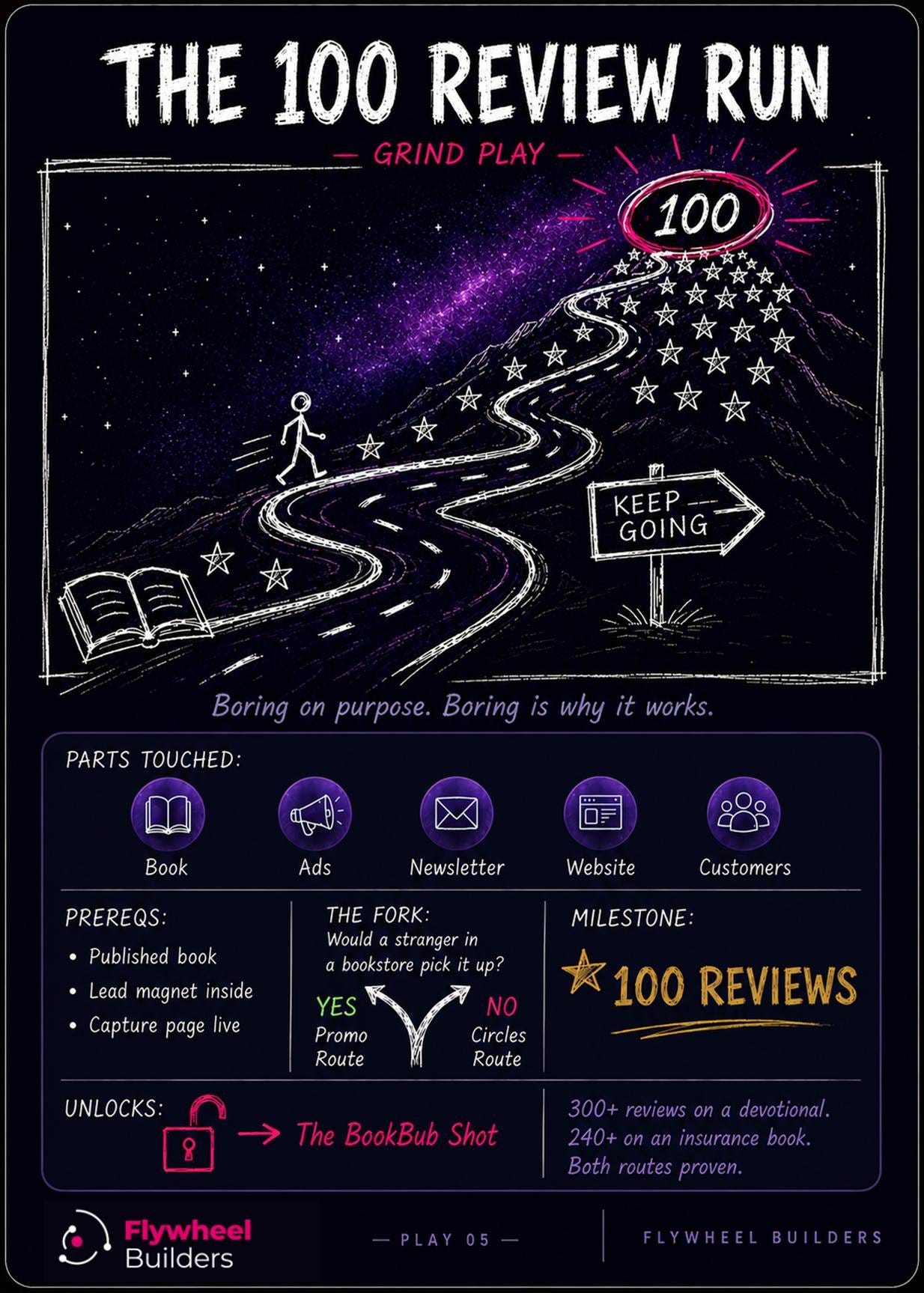
The 100 Review Run
Objective: 100 reviews.
Parts touched: Book, Ads, Website, Customers.
Prerequisites: published book, lead magnet inside it, capture page live.
The moves: price it free, book promos on a rolling calendar, BookBub ads to comp audiences, remind your list at day 20-30. The ask is the mechanism, the reminder is where most reviews actually come from.
The fork, on the card: broad-appeal book runs promos; niche book works the circles where its readers gather.
Duration: months, honestly. This is the grind play.
Milestone: 100 reviews.
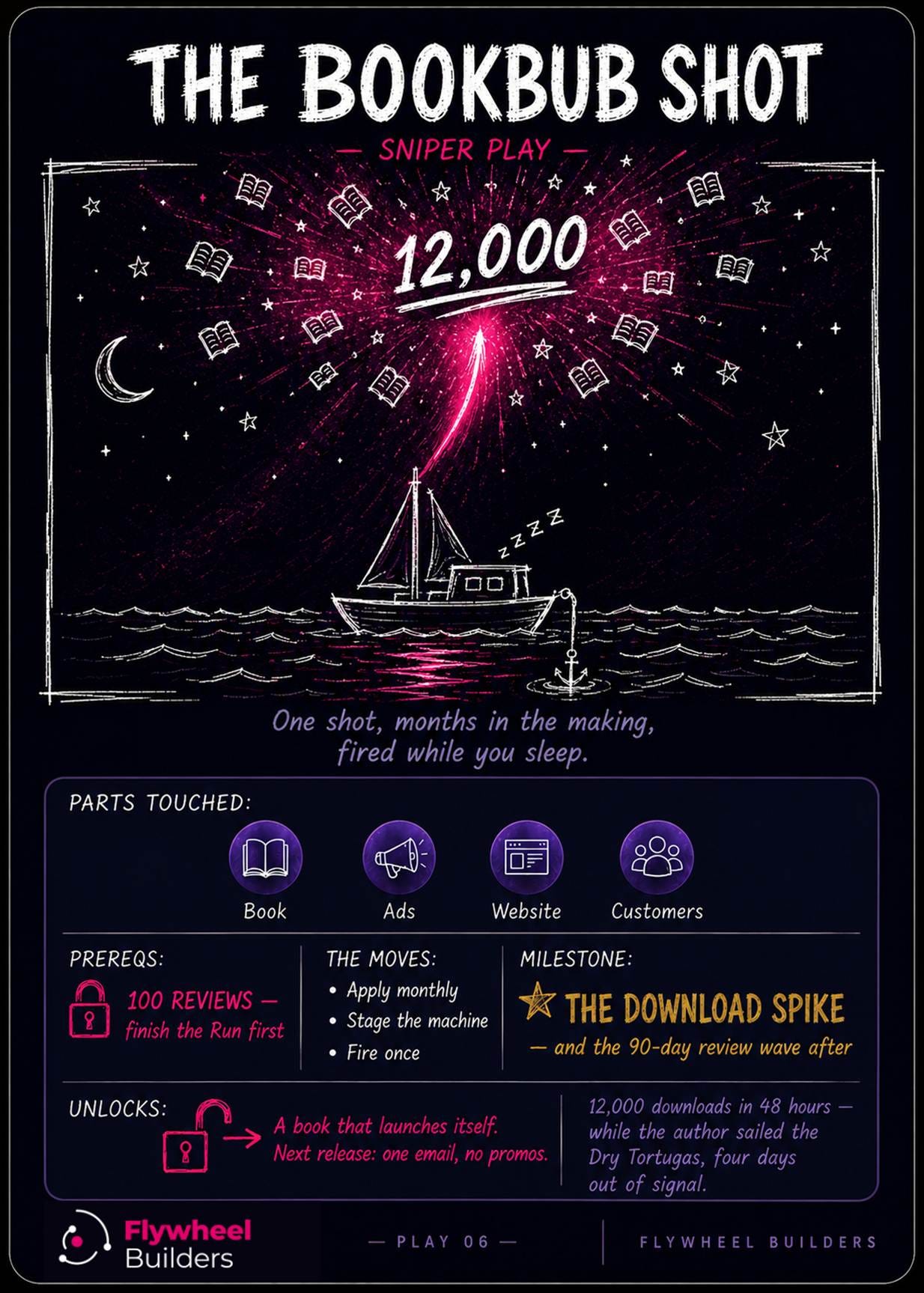
The BookBub Shot
Objective: the promo that moves thousands of downloads in 48 hours.
Prerequisite: 100 reviews — the Run’s milestone is this play’s entry ticket.
The moves: apply monthly until accepted (took me three tries, but I’ve had books rejected for years), stage the machine before the date: lead magnet working, list reminder sequence loaded, review ask in the back matter. Then let it fire.
Milestone: the download spike, and the review wave that rolls in over the next 90 days.
Ask any questions you have about getting book reviews in the comments.
Keep spinning.
Coach Chris